



How to Remove a Tick From a Dog (Without Leaving the Head In)
To remove a tick from a dog, grip it as close to the skin as you can with fine-tipped tweezers and pull straight up with slow, steady pressure. Done the wrong way, it can leave the mouthparts stuck in the skin, push the tick's infected fluid into your dog, or worse, burn them.
You're giving your dog a belly rub and your fingers hit a small, hard bump near the ear. You part the fur and there it is: a grey, swollen tick, or what most of us call a kilni or chichad.
Your first instinct is to grab it and pull. Hold on for a minute. Taking a tick off a dog is a two-minute job when you know how, and this guide shows you the right way, step by step, using things you already have at home.
- What you need before you start
- How to remove a tick from a dog, step by step
- What if the tick's head stays in the skin?
- What not to do: home methods that can hurt your dog
- Where to check your dog for ticks
- Removing ticks from tricky places
- How fast can a tick make your dog sick?
- Too many ticks to pick off one by one?
- Signs to watch for after removing a tick
- How to stop ticks from coming back
- Frequently asked questions
What you need before you start

You don't need a special kit. Most of this is already in your house:
- Fine-tipped tweezers. The eyebrow tweezers from your vanity kit work well. Blunt kitchen tongs and fingernails don't.
- A tick remover hook, if you have one. It's a small plastic tool, cheap online, and easier for beginners.
- Disposable gloves.
- A small jar with a lid, half filled with surgical spirit (rubbing alcohol).
- Antiseptic and cotton, such as diluted povidone iodine.
- Good light. Daylight or your phone torch.
- A helper and a few treats. One person holds and distracts, the other removes.
Try it after a walk, when your dog is tired and happy to lie still.
How to remove a tick from a dog, step by step
- Find the head. Part the fur with your fingers until you can see exactly where the tick enters the skin. You're aiming for that point, not the round body.
-
Grip it low. Hold the tweezers flat against the skin and grab the tick right at its mouth, as close to the skin as you can. Never squeeze the swollen body. That pushes its blood and saliva back into your dog.

-
Pull straight up, slowly. Use steady, even pressure. The skin may lift a little like a tent. That's normal. Keep holding, and the tick will let go. Don't twist or jerk, as that's what snaps the mouthparts off.

- Look at the tick. If its legs are moving and you see a tiny bit of skin at its mouth, you got it out whole.
- Drop it in the jar. Put it in the surgical spirit and close the lid. Don't crush it between your fingers. The fluid inside can carry disease through small cuts on your hands.
- Clean the bite and your hands. Dab antiseptic on the spot. Then wash your hands with soap, even if you wore gloves.
- Treat, then check again. Give your dog a treat, then look over the rest of the body. Where there's one tick, there are usually more.
Using a tick hook instead? Slide the notch under the tick, close to the skin, and follow the tool's instructions. Some hooks are made to be turned gently. With tweezers, always pull straight.
What if the tick's head stays in the skin?
Try once to lift it out gently with clean tweezers. If it doesn't come out easily, leave it alone. Your dog's skin will push the tiny black bit out on its own over a few days, just like a small splinter. Digging at it with a needle does more harm than the bit itself.
Often, what looks like the head is only a small dark scab where the tick was feeding. Keep the spot clean and dry, and check it once a day. If it gets red, swollen, hot or starts to ooze after 2 or 3 days, show it to your vet.
What not to do: home methods that can hurt your dog
You'll see plenty of home remedies on WhatsApp and YouTube. Most of them either don't work or put your dog at risk.
| Method | Why to avoid it |
|---|---|
| Kerosene or petrol | It can poison your dog through the skin and fumes, and it's a fire risk |
| A burning matchstick, agarbatti or cigarette | It burns your dog, and the tick doesn't "back out" |
| Haldi, namak or oil paste | It doesn't loosen the tick. It only delays removal while the tick keeps feeding |
| Vaseline or nail polish | Smothering a tick can make it release more saliva into the wound |
| Bare fingers | You squeeze the body, and the tick's fluid can reach cuts on your hands |
| Twisting and yanking | It snaps the mouthparts off inside the skin |
The aim is simple: get the tick out fast and whole. Anything that makes you wait is helping the tick, not your dog.
Where to check your dog for ticks

Ticks like warm, hidden spots with thin skin. Check these every time:
- Inside and behind the ears
- Around the eyes and eyelids
- Under the collar or harness
- Armpits and the inner thighs
- Between the toes and paw pads
- Under the tail and around the bottom
- Lips and gums
Run your fingers slowly against the direction of the coat. A small tick feels like a grain of rice. A swollen one feels like a small grey pea. On black or dark-coated dogs, use a fine comb and a torch.
Removing ticks from tricky places
- Ears. The outer ear flap is fine with tweezers. Never go into the ear canal. That's a job for the vet.
- Near the eyes or on the eyelid. Don't try this yourself. One wriggle and you could hurt the eye. Go to the vet.
- Between the toes. Ask your helper to hold the paw and gently spread the toes, then remove as usual.
- Lips and gums. Ticks on the outer lip are fine to remove. If one is inside the mouth, see your vet.
How fast can a tick make your dog sick?
Faster than most guides say. Many articles written for the US or UK say a tick needs 24 to 48 hours to spread disease. That holds for some infections, like babesiosis.
But research on the brown dog tick, the most common dog tick in India, shows it can pass ehrlichia to a dog within about 3 hours of attaching. Ehrlichia is one of the main causes of tick fever in Indian dogs.
It's also very common here. A monsoon survey found ticks on 75% of dogs in Delhi and 80% in Mumbai. Across the four regions in that survey, nearly half of the dogs tested were carrying a tick-borne infection.
Too many ticks to pick off one by one?
This happens a lot with Indies, rescued street dogs, and dogs coming back from boarding. When there are 20, 30 or more ticks, tweezers alone won't keep up, and every hour counts.
- Pull off the biggest, swollen ticks first. They have been feeding the longest.
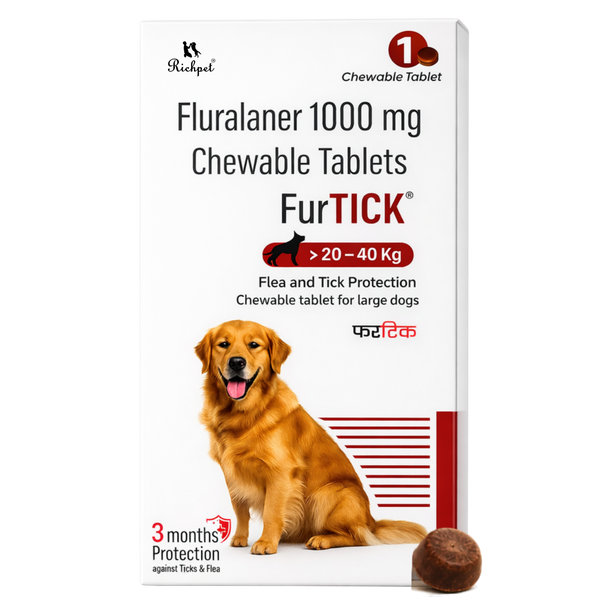
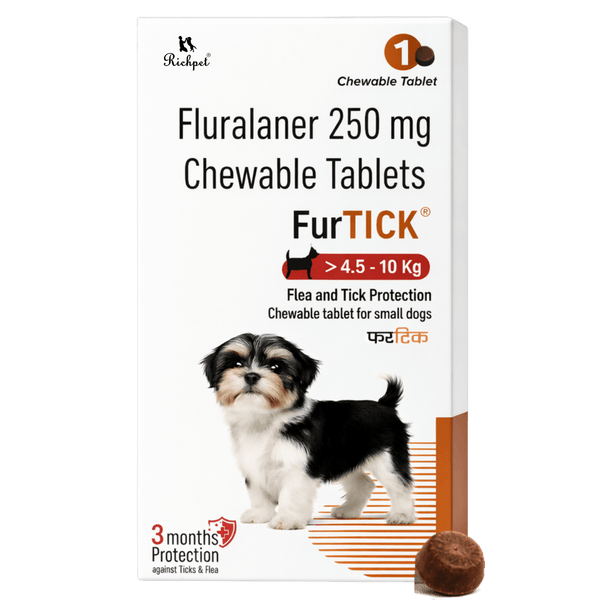
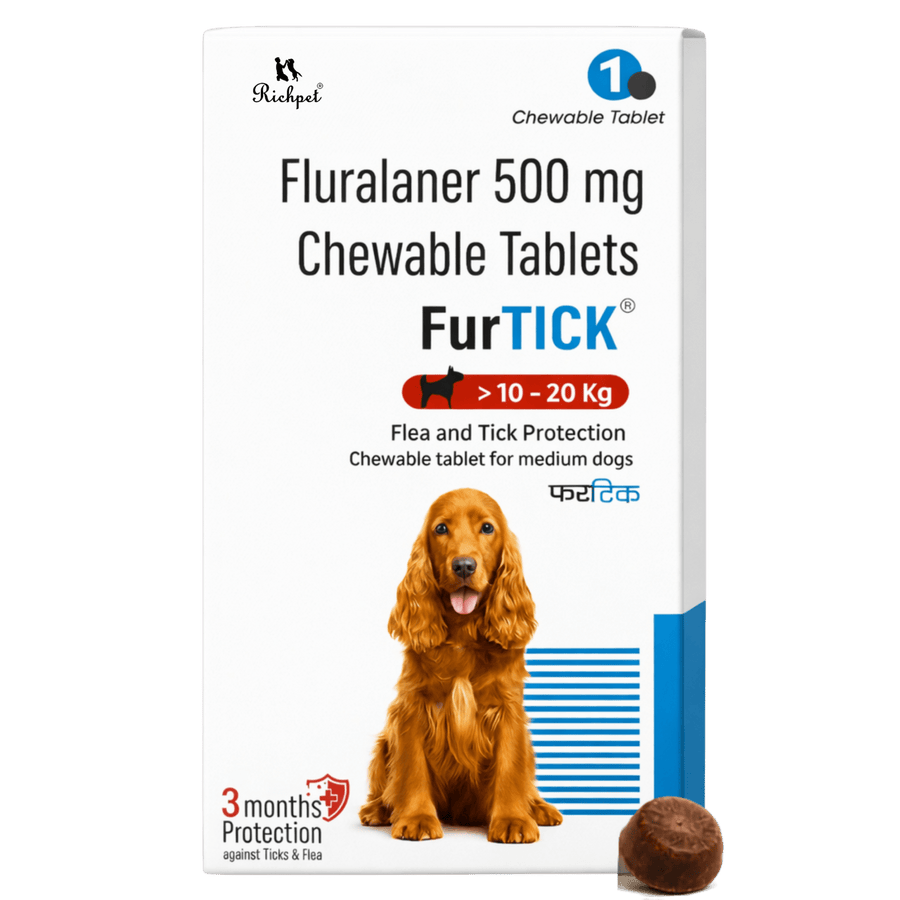
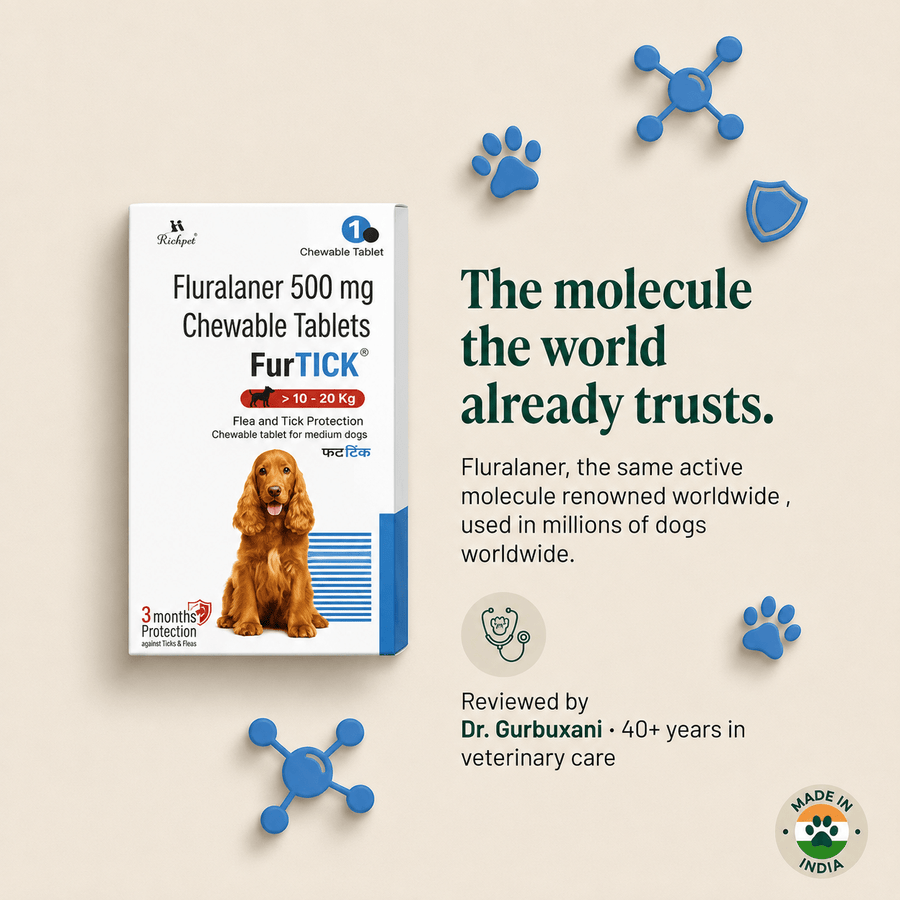
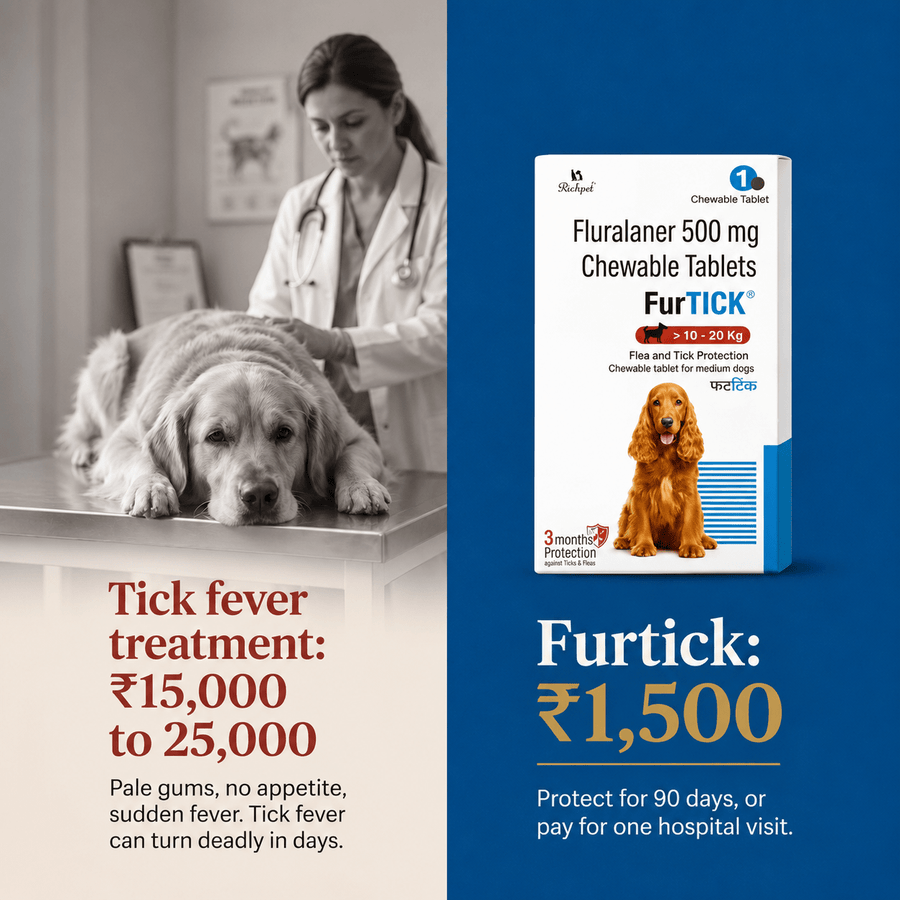
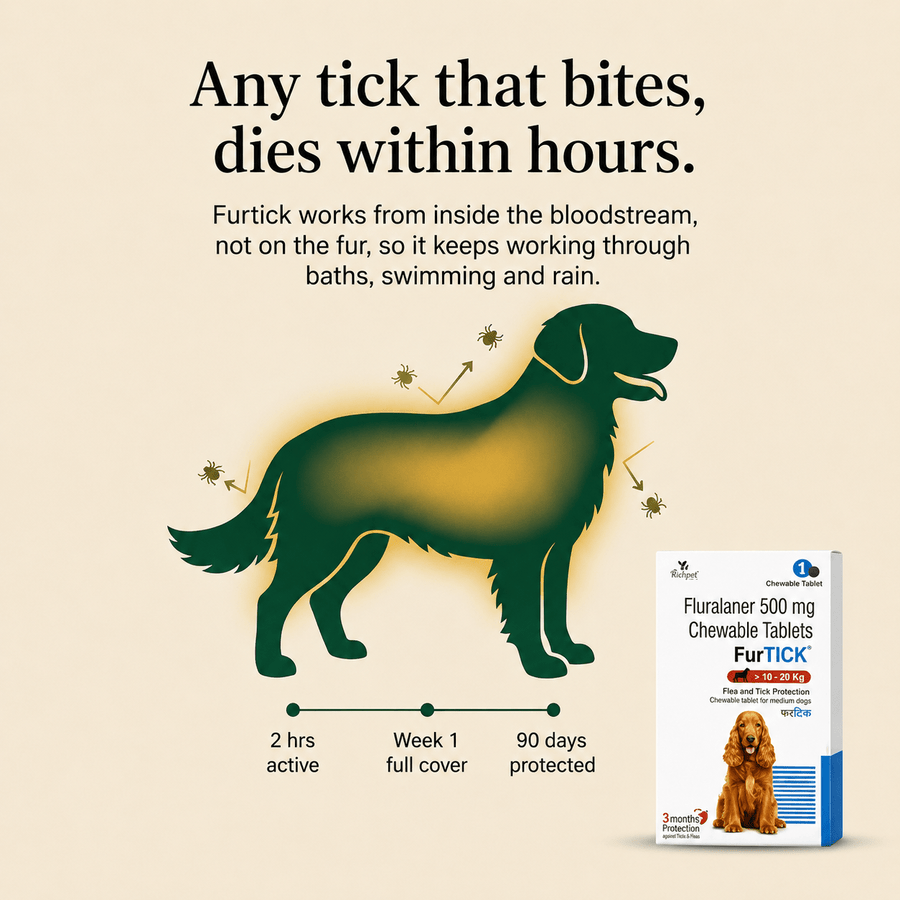
- Treat the whole dog. Talk to your vet about a body-wide option. A tick tablet for dogs such as Furtick works from the inside and lasts 12 weeks. A spot-on for dogs is applied once a month on the neck. An anti-tick spray covers the coat. You can compare all the options on our tick and flea treatment for dogs page.
- Clean the house too. The brown dog tick lives and breeds indoors, in wall cracks, bedding and corners. Wash your dog's bedding in hot water and vacuum the areas they sleep in.
If your dog is weak, has pale gums or can't be handled, go straight to the vet. A heavy load of ticks can cause blood loss.
Signs to watch for after removing a tick
Keep an eye on your dog for the next 2 to 3 weeks. Go to the vet if you notice:
- Fever, or a dog that seems dull and tired
- Not eating
- Pale gums
- Red or brown urine
- Bleeding from the nose
- Swelling, heat or pus at the bite
Tell the vet your dog had a tick. It helps them test for the right infection quickly.
How to stop ticks from coming back
Removing ticks fixes today's problem. Stopping them takes three habits: check your dog after every walk, keep them on a regular tick prevention product, and keep their bed and sleeping corners clean. Our guide on how to avoid ticks on dogs covers the full routine.
Frequently asked questions
The questions Indian pet parents ask us most about removing ticks from dogs.
Can I remove a tick with my fingers? +
How do I get a tick to let go? +
Can I put kerosene or vaseline on a tick? +
Is it okay if a small black part stays in the skin? +
Should I take my dog to the vet after removing a tick? +
Can the ticks on my dog bite me or my kids? +
How often should I check my dog for ticks? +
- CDC. What to do after a tick bite
- Jongejan F et al. (2016). Transmission of Ehrlichia canis by infected brown dog ticks to dogs. Parasites & Vectors
- Companion Animal Parasite Council. Babesia guidelines for dogs
- Abd Rani PAM et al. (2011). A survey of canine tick-borne diseases in India. Parasites & Vectors
- Dantas-Torres F (2010). Biology and ecology of the brown dog tick, Rhipicephalus sanguineus. Parasites & Vectors
Related reads
Found one tick?
Stop the next ones.
Found a tick today? Take it off, clean the spot, and keep watching your dog for a couple of weeks. If ticks keep coming back, it's time to treat the whole dog, not just the ticks you can see.