How to Remove Ticks and Fleas from Puppies: A Safe Guide by Age
Pull ticks off a puppy with fine tweezers close to the skin, and comb fleas out with a fine flea comb every day. What else you can use depends on age and weight. Under 8 weeks, stick to combing, a gentle wash and a spray labelled for unweaned pets. From 8 weeks and 2 kg, a monthly fipronil spot-on is an option, and from 4.5 kg the longer-lasting chews open up. Always treat the mother and the bedding too.
A puppy with ticks or fleas is a worry for any new pet parent. The bites itch, and a tiny puppy has very little blood to spare. But many adult dog products are not safe for puppies, and the rules change every few weeks as your puppy grows.
This guide shows you what is safe at each age, how to get ticks and fleas off a puppy that is too young for treatment, and the warning signs that mean a vet visit can't wait.
- What's safe for ticks and fleas at each age?
- How do you check a puppy for ticks and fleas?
- How to remove a tick from a puppy
- How to get fleas off a puppy that's too young for treatment
- Treat the mother and the litter together
- Should you use tick powder on a puppy?
- Puppy tick fever: the signs to watch for
- When to take your puppy to the vet
- Keeping ticks and fleas away as your puppy grows
- Frequently asked questions
What's safe for ticks and fleas at each age?
This is the table to save. Always check the label of any product for its minimum age and weight. If your puppy falls between two rows, follow the younger one.
| Puppy's age and weight | What you can use | What to avoid |
|---|---|---|
| Newborn to 2 weeks | Pick ticks off with tweezers, comb out fleas, keep the bed clean. Treat the mother | Any bath, spot-on or chew. Ask your vet before using anything |
| 2 to 8 weeks | Daily flea comb, tick removal by hand, a quick lukewarm wash with a puppy-safe shampoo for heavy fleas, a fipronil spray labelled for unweaned pets | Adult spot-ons, chews, powders and collars |
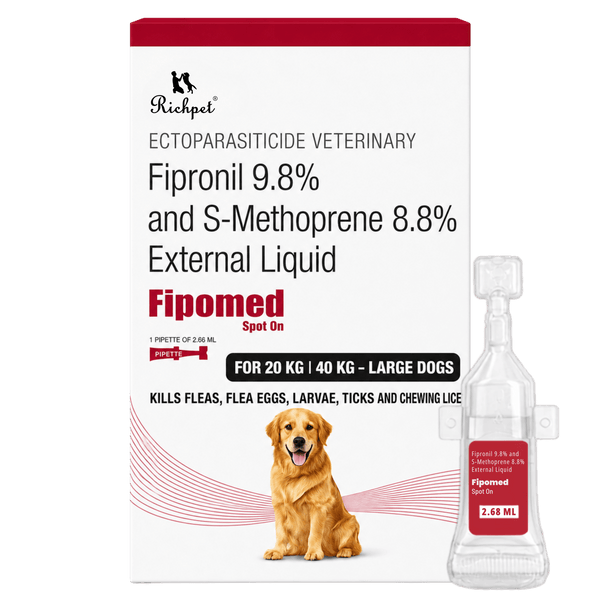
| 8 weeks and at least 2 kg | All of the above, plus a monthly fipronil spot-on in the smallest size (up to 10 kg) | Chews made for bigger dogs |
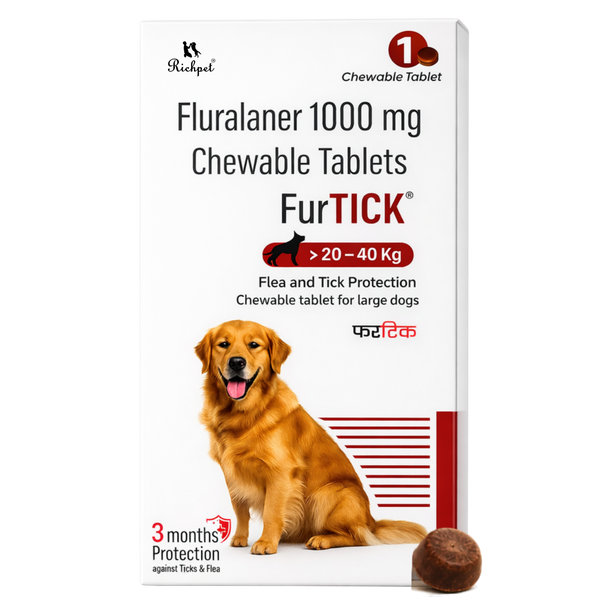
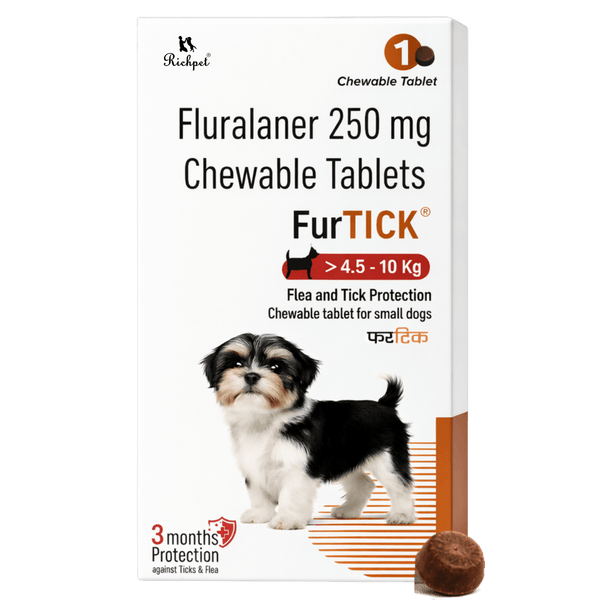
| At least 4.5 kg | All of the above, plus a 12-week chew or a long-lasting spot-on sized for your puppy's weight. Ask your vet before the first chew | Splitting a tube or tablet between puppies |
| Any age | Dose by weight, not by age | Kerosene, phenyl, Dettol, camphor, cat products, and any product without an age on the pack |
You can see the puppy-suitable options and their weight limits in our tick and flea range.
How do you check a puppy for ticks and fleas?
Puppies have thin, soft coats, so ticks and fleas are easier to spot than on an adult dog. Do this check once a day for a few minutes:
- Ears. Look inside and behind the flaps. The head and ears are a favourite spot for the brown dog tick.
- Between the toes and pads. Spread each toe gently.
- Neck, armpits and groin. Run your fingers slowly over the skin.
- Belly and base of the tail. Look for tiny black specks. That is flea dirt.
To check a black speck, put it on a damp white tissue. Flea dirt is digested blood, so it turns reddish brown.
How to remove a tick from a puppy
The method is the same as for an adult dog, just gentler:
- Hold your puppy still. Have someone hold the puppy in their lap, or wrap it loosely in a towel.
- Grip the tick close to the skin with fine-tipped tweezers or a tick remover.
- Pull straight out, slowly and steadily. Don't twist, squeeze or jerk it.
- Clean the spot with plain soap and water.
- Check the rest of the body. Where there is one tick, there are usually more.
Never burn a tick, cover it in oil or put kerosene on it. For the full step-by-step, read how to remove a tick from a dog.
How to get fleas off a puppy that's too young for treatment
If your puppy is under 8 weeks, you can still clear fleas safely. It just takes more hands-on work:
- Comb every day. Use a fine flea comb over a bowl of soapy water, and dip the comb after each stroke so the fleas drown.
- Give a quick lukewarm wash if there are lots of fleas. Use a puppy-safe shampoo, such as Richpet Anti Tick Puppy-safe Shampoo, keep it away from the eyes and ears, and keep the bath short. Young puppies chill fast, so dry your puppy fully and keep it warm afterwards. For a very young puppy, ask your vet before the first bath.
- Use a spray made for young puppies. A fipronil spray labelled for unweaned pets, such as Richpet Fipo-Mec Fipronil Spray, can be used at the dose the pack gives for your puppy's weight. Keep it away from the face and let the coat dry before the puppy feeds.
- Wash the bedding in hot water every 2 to 3 days, and vacuum the area where the puppies sleep.
Fleas lay eggs that drop into the bedding and floor, so new fleas keep hatching for weeks. Our guide on how to get rid of fleas on dogs explains why, and how to clean your home.
Treat the mother and the litter together
If your puppies are still with their mother, she is the main source of their ticks and fleas. Treating only the puppies won't work.
- Treat the mother with a product that is safe for nursing dogs. Richpet Fipo-Mec Fipronil Spray is labelled for pregnant and lactating pets. Ask your vet before using a spot-on or chew on a nursing dog.
- Treat every other pet in the house at the same time.
- Clean the whelping area daily. Wash the bedding, vacuum, and mop the floor around it.
Should you use tick powder on a puppy?
Many Indian pet shops sell tick powders, and "puppy tick powder" is a common search. Our advice is to skip powders for young puppies. The dust spreads into the air, puppies breathe it in and lick it off their coat, and it is hard to measure a safe amount for a 1 or 2 kg puppy.
A gentle shampoo, a puppy-safe spray or, once your puppy is old enough, a spot-on gives a measured dose with far less mess. For gentle options, see our puppy shampoo picks.
Puppy tick fever: the signs to watch for
Tick fever is the biggest reason to take ticks on a puppy seriously. It is spread by tick bites, and young puppies get sicker, faster. A survey of 525 dogs across four regions of India found ehrlichia, a main cause of tick fever, in about 1 in 5 dogs, and in close to 2 in 5 dogs in Delhi.
Watch your puppy closely for 3 weeks after you find a tick. See a vet the same day if you notice:
- Fever, or a puppy that feels hot and weak
- Not eating or drinking
- Pale or white gums
- Nosebleeds, or small red spots or bruises on the belly
- Sudden tiredness, or a puppy that won't play
Learn more about the symptoms of tick fever in dogs.
When to take your puppy to the vet
- Your puppy is under 8 weeks and covered in fleas or ticks
- The gums look pale, or the puppy is weak. Heavy fleas can cause anaemia in a small puppy
- Any tick fever sign from the list above
- Red, broken skin, or a bump that swells where a tick was
- You are not sure what is safe for your puppy's age and weight
Keeping ticks and fleas away as your puppy grows
Once your puppy reaches 8 weeks and 2 kg, start regular protection and don't leave gaps. A monthly fipronil spot-on in the smallest size, such as Richpet Monthly Tick & Flea Spot-On (0 to 10 kg), is a common first choice.
When your puppy crosses 4.5 kg, a 12-week chew, such as Richpet 90-Day Tick & Flea Protection Chew (4.5 to 10 kg), means fewer dates to remember. Weigh your puppy every month, because puppies outgrow their size band fast.
Compare sizes in our spot on for dogs range. For the year-round habits that keep ticks out of your home, see how to avoid ticks on dogs.
Frequently asked questions
The questions Indian pet parents ask us most about puppies, ticks and fleas.
How early can you treat a puppy for ticks and fleas? +
Can I bathe a 4-week-old puppy with fleas? +
What should I do if I find a tick on my puppy? +
What if the tick's head stays in my puppy's skin? +
Can fleas kill a puppy? +
Is neem oil safe for puppies? +
When should I start regular tick and flea protection? +
- Abd Rani PAM et al. (2011). A survey of canine tick-borne diseases in India. Parasites & Vectors
- Companion Animal Parasite Council. Fleas guideline
- ESCCAP (2022). Control of ectoparasites in dogs and cats, Guideline 03
- CDC. What to do after a tick bite
- Dantas-Torres F (2010). Biology and ecology of the brown dog tick, Rhipicephalus sanguineus. Parasites & Vectors
Related reads
Small puppy?
Start with the right size.
Dose by weight, treat the mother and the bedding, and weigh your puppy every month as it grows.